Strength training long ago stopped being purely male territory, but plenty of fears still surround it: “I'll get bulky,” “I'll ruin my figure,” “it's bad for women.” The editorial team has looked into what the research says, how a woman's body actually differs, and where to start so that training is effective and safe.
Why women should train with weights
The 2020 World Health Organization recommendations advise adults, regardless of sex, to perform muscle-strengthening exercises at least twice a week, in addition to aerobic activity. Yet many women still hold the stereotype that strength training is a “male” pursuit that will make the figure massive.
In reality, strength training gives women the same benefits as men: increased strength and muscle mass, improved insulin sensitivity, maintenance of bone density, better posture, and everyday functionality. For women the effect on bones is especially important, since the risk of osteoporosis rises substantially after menopause.
The LIFTMOR study (Watson et al.) showed that supervised high-intensity strength and impact exercises improved bone mineral density and physical function in postmenopausal women with low bone mass — without an increase in injury rates. This dispels the myth that heavy weights are “dangerous” for women.
Finally, strong muscles help control body weight: muscle tissue is metabolically active, and strength training increases total energy expenditure and helps preserve muscle during weight loss.
The “bulk” myth and the real differences
Testosterone levels in women are many times lower than in men, so absolute gains in muscle mass are usually noticeably smaller. Building “male” musculature by accident, training a few times a week, is practically impossible: even years of dedicated training produce a proportional, athletic look.
At the same time, in relative terms the difference is smaller than expected. A 2020 meta-analysis by Roberts, Nuckols, and Krieger showed that relative gains in hypertrophy and lower-body strength in men and women are similar, and in relative upper-body strength women even had an advantage.
There are other differences too. Hunter's reviews on sex differences in fatigability show that women are often less fatigable during submaximal contractions at the same relative intensity. In practice this means women can often perform more reps at the same percentage of maximum and recover faster between sets.
These differences do not require a separate “women's” program. The principles of effective training are the same; only the details change: starting weights, the pace of progression, and the emphases.
The basics of a program for a beginner
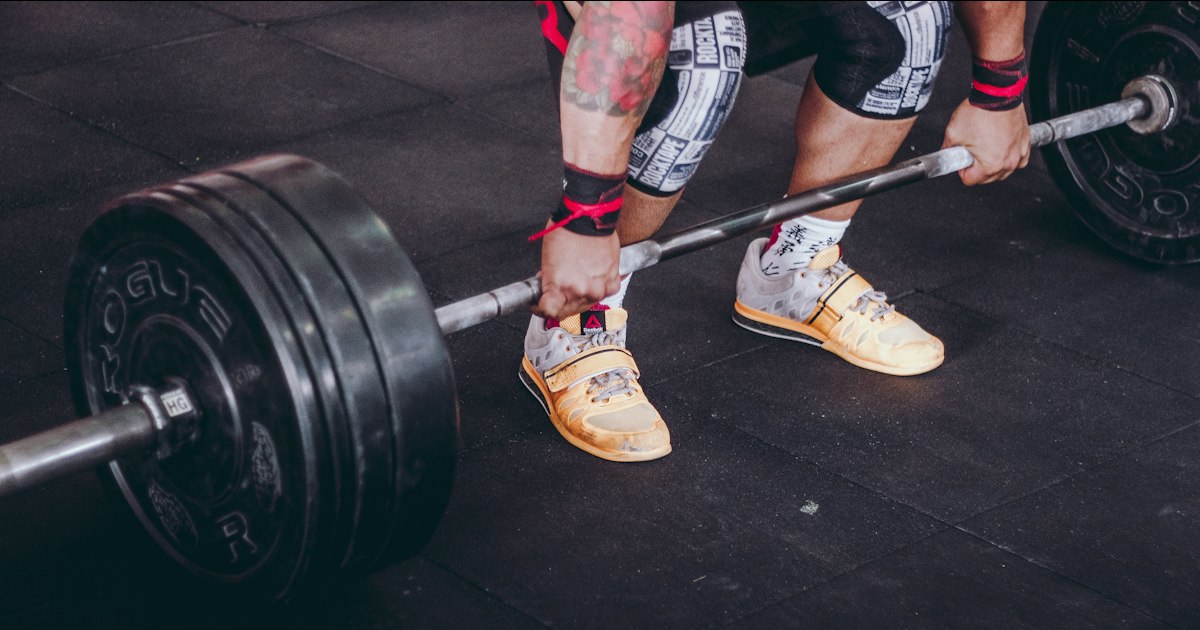
The basis of the program is formed by basic movement patterns: squat, hinge (deadlift or its variations), press, row, lunges, and core work. They engage many muscle groups and give the greatest effect for the time spent. Isolation exercises for the glutes, arms, or shoulders are added after the basics.
- 2–3 full-body workouts per week;
- 5–7 exercises per workout, 2–3 working sets in each;
- a range of 6–15 reps with a reserve of 1–3 reps;
- rest between sets of 1.5–3 minutes in the basic exercises;
- a gradual increase in weight or reps every week or two.
This format matches the general ACSM recommendations on strength training for healthy adults and suits beginners well. The load is chosen so that the last reps are hard but technique stays clean.
| Movement pattern | Example starter exercises | Progression |
|---|---|---|
| Squat | Goblet squat, squat to a bench | Barbell squat |
| Hinge | Romanian deadlift with dumbbells, hyperextension | Barbell deadlift |
| Press | Push-ups off a bench, dumbbell press | Barbell press, push-ups from the floor |
| Row | Lat pulldown, bent-over dumbbell row | Band-assisted pull-ups, then unassisted |
| Unilateral work | Reverse lunges, step-ups | Bulgarian split squats |
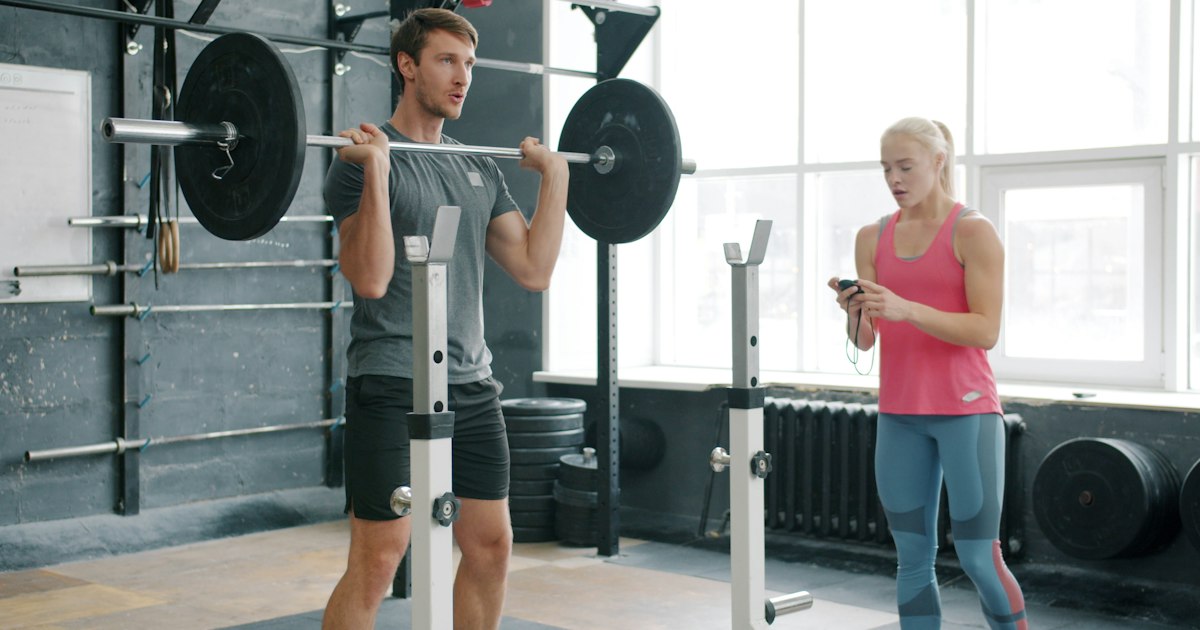
Do not be afraid of the barbell and free weights. Machines are convenient at the start, but free weights better develop coordination and stabilization. It is advisable to do your first sessions with a trainer to set up your technique.
The menstrual cycle, pregnancy, and menopause
The popular idea of “training according to the phases of the cycle” has a weak evidence base. A 2020 meta-analysis by McNulty and colleagues found that performance may be slightly lower in the early follicular phase, but the effect is small and highly individual. The authors advise going by your own feeling rather than general schemes.
A practical approach is to keep a training log and note how you feel on different days of the cycle. If you have less strength on certain days, the load can be reduced; if no difference is felt, there is no need to change the program.
During pregnancy and after childbirth, the guidelines of the American College of Obstetricians and Gynecologists (ACOG) support regular physical activity in the absence of contraindications, including moderate-intensity strength exercises. The nature of the load must be agreed with the doctor managing the pregnancy.
During menopause, strength training takes on special importance because of the accelerated loss of bone mass and muscle. Regular loading helps preserve strength and functionality and is part of osteoporosis prevention.
Nutrition and recovery
Strength training yields results only with sufficient nutrition. Women who simultaneously try to train and substantially restrict calories often face a lack of energy and no progress. The position of the International Society of Sports Nutrition (ISSN) on protein recommends about 1.4–2.0 g of protein per kilogram of body weight per day for active people.
A prolonged significant energy deficit combined with high loads is associated with relative energy deficiency in sport (RED-S): menstrual cycle disturbances, reduced bone density, and other consequences. The disappearance of menstruation against a backdrop of training is a reason to see a doctor, not a sign of “good shape.”
Among supplements for women who train, creatine monohydrate is the best studied: its effectiveness and safety at recommended doses are confirmed for both sexes. Protein is a convenient source of protein but not mandatory if the diet is balanced.
Sleep and stress management are no less important than nutrition. Recovery between workouts happens mainly during sleep, so 7–9 hours of sleep is a full-fledged part of the program.
Editorial conclusions
Strength training is no less beneficial for women than for men: it strengthens muscles and bones and improves metabolism and functionality. The fear of “getting bulky” has no physiological basis.
Relative gains in strength and muscle in women are similar to men's, so the program principles are the same: basic exercises, load progression, 2–3 workouts a week, sufficient protein and sleep.
During pregnancy, after childbirth, and with chronic conditions, the program should be agreed with a doctor. Cycle disturbances against a backdrop of training and dieting are a signal to review the energy balance.
We also recommend our articles on core muscle training, on functional training, and on training after 50.
References
- Roberts BM, Nuckols G, Krieger JW. Sex differences in resistance training: a systematic review and meta-analysis. J Strength Cond Res. 2020;34(5):1448–1460.
- Hunter SK. Sex differences in human fatigability: mechanisms and insight to physiological responses. Acta Physiol (Oxf). 2014;210(4):768–789.
- Watson SL, Weeks BK, Weis LJ, et al. High-intensity resistance and impact training improves bone mineral density and physical function in postmenopausal women with osteopenia and osteoporosis: the LIFTMOR randomized controlled trial. J Bone Miner Res. 2018;33(2):211–220.
- McNulty KL, Elliott-Sale KJ, Dolan E, et al. The effects of menstrual cycle phase on exercise performance in eumenorrheic women: a systematic review and meta-analysis. Sports Med. 2020;50(10):1813–1827.
- ACOG Committee Opinion No. 804: Physical activity and exercise during pregnancy and the postpartum period. Obstet Gynecol. 2020;135(4):e178–e188.
- Bull FC, Al-Ansari SS, Biddle S, et al. World Health Organization 2020 guidelines on physical activity and sedentary behaviour. Br J Sports Med. 2020;54(24):1451–1462.
- Jäger R, Kerksick CM, Campbell BI, et al. International Society of Sports Nutrition position stand: protein and exercise. J Int Soc Sports Nutr. 2017;14:20.
Andriy Melnyk
A strength-sports coach and author of programs for beginner and intermediate levels. Writes about training planning.